
Cannibal Corpse Album Covers: History, Style, and Cultural Impact
The band Cannibal Corpse is famous for extreme music and bold artwork. Many fans search for Cannibal Corpse Album Covers because they are shocking and unique. These covers play a strong role in shaping the band’s image and identity.
The artwork shows dark themes like horror, death, and fantasy violence. These visuals match the intense sound of the band. In this guide, you will learn the history, style, and meaning of cannibal corpse album covers in simple words.
Early History of Cannibal Corpse Album Covers
The journey of cannibal corpse album covers started in 1990. Their first album, Eaten Back to Life, introduced a horror theme. The design showed a zombie-like figure in a dark setting.
Most early artwork was created by Vincent Locke. He is a comic artist known for detailed horror drawings. His style quickly became a key part of the band’s visual identity.
These covers were not random images. They were designed to match the lyrics and themes. This connection made fans feel the music in a stronger way.
The Role of Vincent Locke in Artwork Design
Artist Vincent Locke created most of the cannibal corpse album covers. His work mixes comic art with horror scenes. He uses strong lines, bold colors, and detailed shading.
His art often shows scenes that look like horror films. Even though the images are extreme, they show high skill. Fans respect his work for its creativity and detail.
This long partnership between the band and the artist created a consistent look. It helped the band stand out in the death metal genre.
Most Popular Cannibal Corpse Album Covers
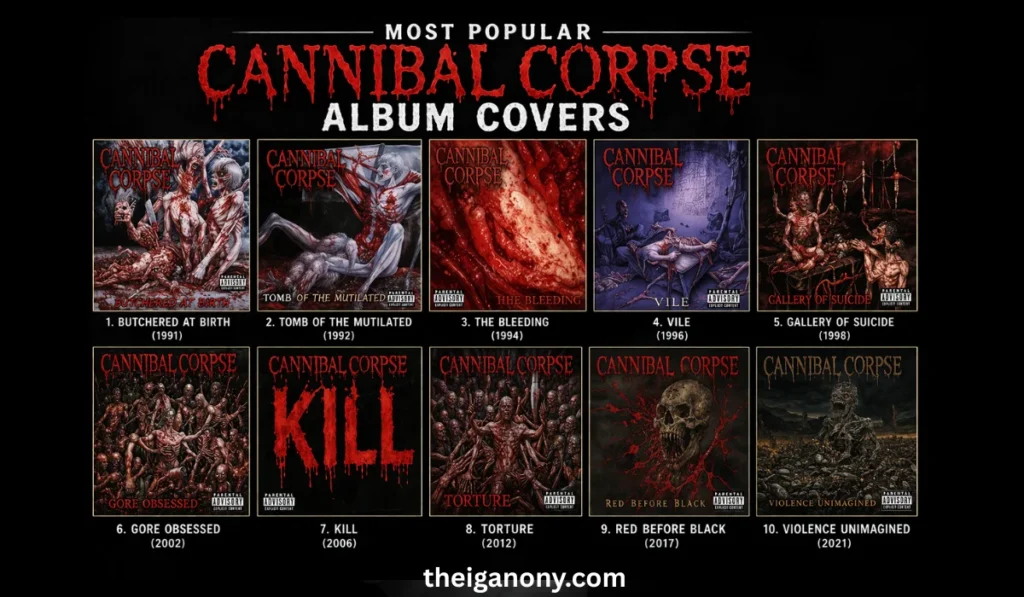
Some cannibal corpse album covers became more famous than others. These covers are often discussed by fans and critics.
| Album Name | Release Year | Key Highlight |
|---|---|---|
| Butchered at Birth | 1991 | One of the most banned covers |
| Tomb of the Mutilated | 1992 | Highly controversial artwork |
| The Bleeding | 1994 | More abstract and toned down |
| Kill | 2006 | Minimal design with strong impact |
| Red Before Black | 2017 | Unique modern perspective |
The cover for Butchered at Birth is one of the most famous. It shocked many people and was banned in several countries. This controversy made the band more popular.
Read more: Deep winter celebrities
Why Cannibal Corpse Album Covers Are Controversia
Many cannibal corpse album covers faced censorship. Some countries did not allow stores to display them. In some cases, covers were replaced with plain designs.
The reason is simple. The artwork shows graphic and disturbing scenes. These visuals are not suitable for general audiences.
However, fans see it as a form of art. They believe the covers express the extreme nature of the music. This difference in opinion keeps the topic active even today.
Artistic Style and Visual Themes
The style of cannibal corpse album covers is very detailed. The artwork often uses hand-drawn techniques. It focuses on realism mixed with horror fantasy.
Common themes include death, decay, and dark storytelling. The colors are often red, black, and dark tones. These colors create a strong emotional effect.
Even though the content is extreme, the art shows careful planning. Each detail adds to the overall message of the album.
Evolution of Cannibal Corpse Album Covers Over Time
Over the years, cannibal corpse album have changed slightly. Early designs focused on shock value and gore. Newer covers use cleaner lines and modern tools.
Albums like Violence Unimagined and Chaos Horrific show this change. The art looks sharper and more polished. However, the dark theme remains the same.
This balance between old and new styles keeps fans interested. It also helps the band stay relevant in modern music.
Impact on Death Metal Culture
The influence of cannibal corpse album goes beyond music. These designs appear on shirts, posters, and merchandise. Fans proudly wear them as symbols of identity.
Many other bands also follow this style. The artwork helped define the look of death metal. It became a standard for extreme music visuals.
Today, these covers are part of music history. They show how art and music can work together to create a strong impact.
Key Facts About Cannibal Corpse Album Covers
| Feature | Details |
|---|---|
| Main Artist | Vincent Locke |
| Style | Horror, gore, detailed drawing |
| First Album | Eaten Back to Life (1990) |
| Most Controversial | Butchered at Birth |
| Modern Style | Cleaner but still dark |
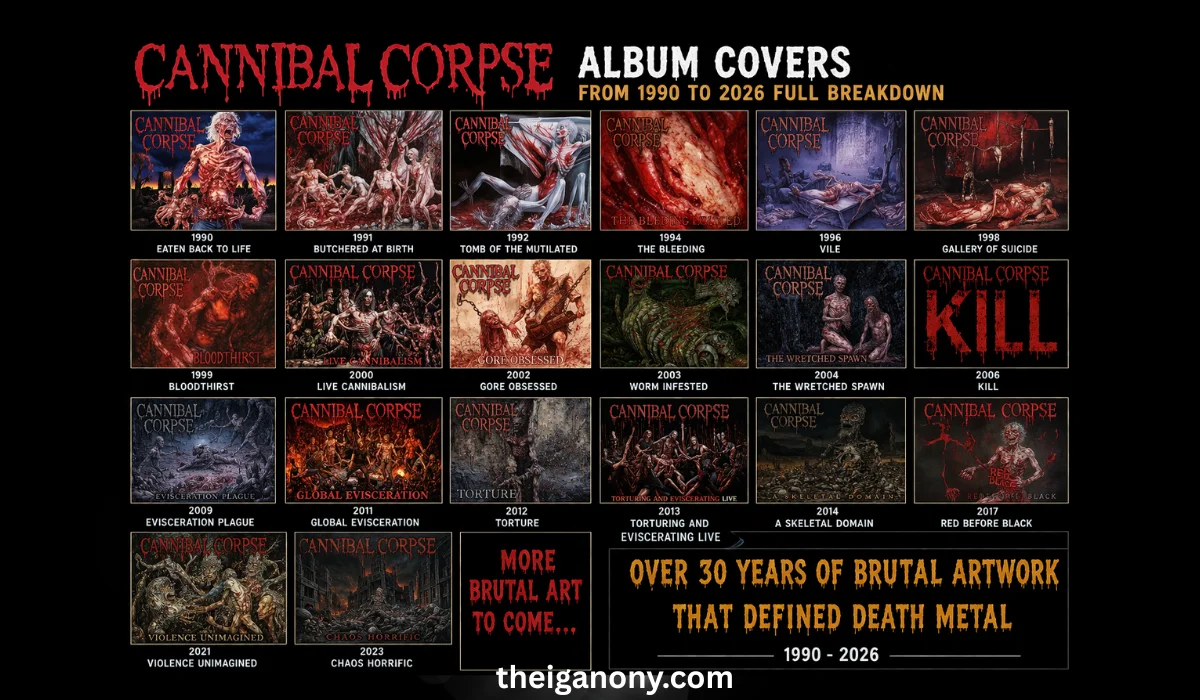
Cannibal Corpse Album Covers From 1990 to 2026 Full Breakdown
The band Cannibal Corpse built a strong identity through bold visuals. From 1990 to 2026, cannibal corpse album evolved in style but kept their dark themes. Early covers like Eaten Back to Life and Butchered at Birth focused on raw horror and shock value. These designs were detailed and often banned in many countries.
Over time, the artwork became cleaner and more refined. Albums like Red Before Black and Chaos Horrific show modern design techniques. However, the core themes of death, fear, and intensity remain unchanged. This long journey proves that cannibal corpse album covers are not just art but a powerful part of metal culture.
Read more: Funny pictures of people faces
Frequently Asked Questions
What are cannibal corpse album covers known for?
They are known for graphic horror art and detailed drawings. These covers match the band’s extreme music style.
Who designs cannibal album covers?
Most covers are created by Vincent Locke, a skilled comic artist known for horror illustrations.
Are cannibal corpse album banned?
Yes, many covers were banned or censored in different countries. This happened due to their graphic content.
Why do fans like cannibal album covers?
Fans enjoy the bold style and strong connection with the music. The artwork feels unique and powerful.
Conclusion
Cannibal corpse album covers are more than just images on albums. They are a key part of the band’s identity and success. Their bold style, detailed art, and strong themes make them unforgettable.
Over time, these covers have shaped the look of death metal music. They continue to attract attention and spark debate in 2026. Whether people love them or not, they remain some of the most powerful visuals in music history.