
Rue the Day Meaning: A Simple Explanation
Understanding English idioms helps you improve reading, writing,
and communication skills. One powerful old phrase is Rue the Day Meaning.
This expression is still used in stories, films, and strong warnings today.
Even in 2026, people use this phrase for emotional impact.
It is not common in daily talk, but it is important in literature.
In this article, you will learn what it means, how to use it,
and why it is still important in modern English.
What Does Rue the Day Meaning Mean?
The rue the day meaning is a phrase that shows deep regret.
It means someone will strongly regret a past action in the future.
The word “rue” means to feel sorrow or regret.
So when someone says this phrase, they are warning about future pain.
For example, if someone says:
“You will rue the day you ignored this advice,”
it means you will later feel very sorry about it.
This expression is often used in emotional or dramatic situations.
Simple Explanation of Rue the Day Meaning
The rue the day meaning can be explained in very simple English.
It means “you will regret this later in a strong way.”
It’s not used for small mistakes.
It is used for serious actions or big consequences.
This phrase is stronger than normal regret.
It creates a feeling of warning and future punishment.
Because of this, it is mostly used in stories or dramatic speech.
Origin of Rue the Day Expression
The phrase comes from old English literature.
The word “rue” was commonly used in older writings.
Writers used it to show sadness, regret, and emotional pain.
Over time, it became part of fixed expressions.
The rue the day ” became popular in poems and plays.
Characters in serious or dramatic moments often use it.
Even today, it still appears in movies and books for effect.
Read more: Blueberry watermelon geek bar
How Rue the Day Meaning is Used in English
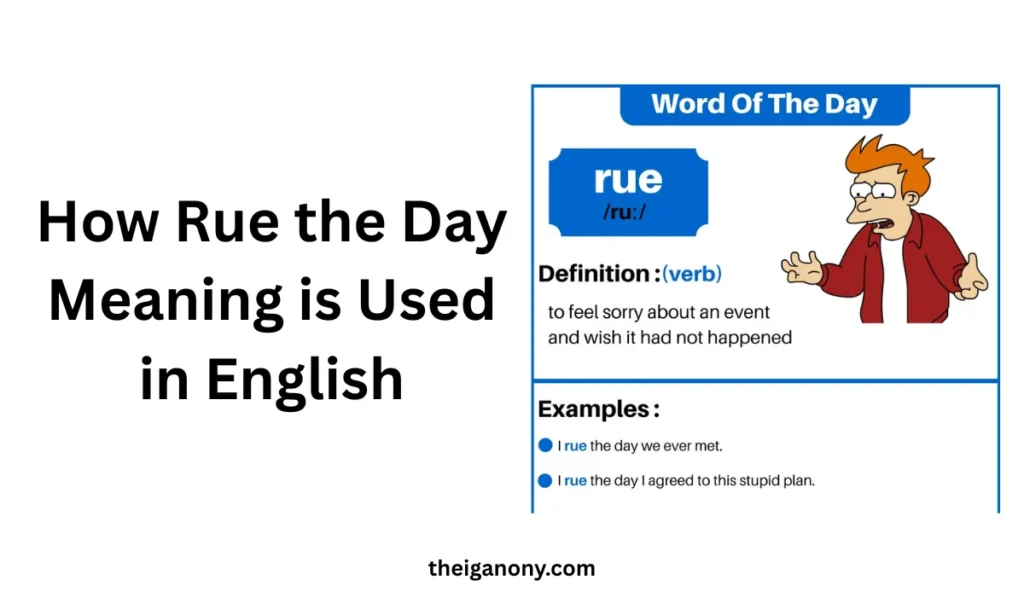
The rue the day meaning is usually used in warning sentences.
It’s not used in casual conversation.
It often appears in statements about future consequences.
It shows that someone will regret their actions later.
Example:
“You will rue the day you made that decision.”
This sentence shows strong emotional warning.
It suggests that the result will be painful or harmful.
Examples of Rue the Day in Real Sentences
Understanding examples helps you learn faster.
Here are simple uses of the phrase in different situations.
| Situation | Example Sentence |
|---|---|
| Warning | You will rue the day you lied to them. |
| Story | The king warned the traitor he would rue the day. |
| Advice | You may rue the day you stop learning new skills. |
| Drama | She told him he would rue the day he left her. |
Each sentence shows future regret and emotional impact.
This is the main purpose of the phrase.
Difference Between Rue and Regret
Many learners think “rue” and “regret” are the same.
They are similar but not identical.
The rue the day meaning is stronger than simple regret.
It is more emotional and dramatic.
| Word | Meaning | Usage |
|---|---|---|
| Rue | Deep emotional regret | Formal, literary |
| Regret | Feeling sorry | Common daily English |
“Regret” is used in daily life.
“Rue” is used in storytelling or strong emotional speech.
Why Writers Use Rue the Day Meaning
Writers use this phrase to create strong emotional impact.
It makes sentences more powerful and dramatic.
The rue the day meaning adds tension in stories.
It often appears when characters make serious mistakes.
It helps show punishment or future consequences.
This makes the story more interesting and emotional.
Even in 2026, writers still use it in creative content.
Read more: Association for social development
Common Mistakes in Using Rue the Day
Many English learners misuse this phrase.
One mistake is using it in casual conversation.
It sounds too dramatic for daily speech.
Simple words like “you will regret it” are better in normal talk.
Another mistake is using it without future meaning.
It always refers to something that will happen later.
The rue the day meaning must show future regret only.
Modern Use of Rue the Day in 2026
Even today, this phrase appears in modern content.
The rue the day meaning is seen in movies and novels.
It is also used in social media captions for drama.
People use it to sound poetic or powerful.
However, it is still not common in daily conversation.
It is mainly used for storytelling or emotional expression.
Language changes, but strong phrases like this remain useful.
When You Should Use Rue the Day
You should use this phrase carefully.
It is best for formal or dramatic writing only.
The rue the day meaning fits storytelling, speeches, and literature.
It should not be used in normal everyday talk.
Use it when you want to create strong emotional warning.
Otherwise, simple language is better for communication.
Emotional Power of Rue the Day Meaning
This phrase carries strong emotional weight.
It shows regret that is deep and lasting.
The rue the day meaning creates fear of future consequences.
It makes the listener think about their actions.
That is why it is often used in warnings.
It is more powerful than normal regret words.
Writers use it to make readers feel emotional impact.
Summary Table of Rue the Day Meaning
| Topic | Explanation |
|---|---|
| Meaning | Deep future regret or sorrow |
| Usage | Formal, dramatic writing |
| Tone | Strong, emotional, warning |
| Common use | Stories, movies, literature |
| Modern use | Still used in 2026 content |
This table shows the main points clearly.
The phrase is powerful but not for daily use.
Frequently Asked Questions
What is rue the day meaning in simple words?
It means you will strongly regret something in the future.
Is rue the day used in modern English?
Yes, but mostly in stories, movies, and writing.
Can I use rue the day in daily conversation?
No, it sounds too formal and dramatic for daily spee
What is the difference between rue and regret?
“Rue” is stronger and more emotional than “regret.”
Conclusion
The rue the day meaning is a strong English idiom.
It shows deep future regret and emotional warning.
It is mostly used in storytelling and dramatic speech.
Even in 2026, it remains useful in literature and media.
Understanding this phrase helps you improve English skills.
It also helps you understand older and modern writing styles.
Learning such expressions makes your language more powerful and expressive.